Which Side of Mull Today? Letting the Wind Choose Your Coast
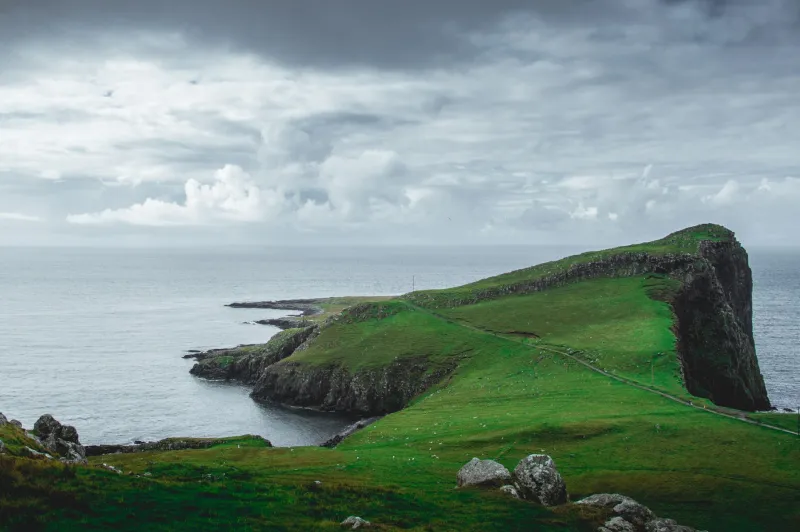
Most of us arrive on Mull with a coast already in mind. Maybe it is the wide sand at Calgary, the drama of the west near Loch na Keal, or a cottage window that promises nothing but sea. That is a lovely way to plan a holiday, right up until the forecast turns and the coast you booked becomes the coast you hide from. The windward rule is simpler: before you commit to a day out, look at where the wind is coming from, then choose the side of the island that gets the best of it.
Start with the forecast, not the map
Mull looks small on paper, but it behaves like several islands stitched together. The west coast faces the Atlantic. The east side looks across the Sound of Mull towards Morvern and the mainland. In a prevailing south-westerly, those two coasts can feel like different seasons. One is all spray, bent grass and horizontal rain; the other can be mild enough for a slow coffee outside.
Check three things before you leave your base: wind direction, wind speed and gusts. A steady 12mph is one thing; 25mph with 40mph gusts is another. Met Office, Windy and XCWeather are all useful, and local advice is better still. If the arrows point from the west or south-west, expect the west coast to take the brunt. If they swing round to the east or north-east, the usual shelter flips and the Sound of Mull can become the exposed side.
How the two coasts behave
The west is the side of big skies and long views. It is also the side where wind has travelled over open water for a long way, which means it arrives with force and carries sand with it. On a bright, calm day it is hard to beat. On a blustery one, a beach walk can turn into a battle with your own hood. Even a short hop from the car can feel longer than it looked on the map.
The east is generally more forgiving in our common south-westerlies. The Sound of Mull offers a degree of shelter, and the woods around Craignure, Salen and Fishnish give you options when the shore itself is too lively. That does not make the east soft or second-best. It makes it useful. A day that would be a write-off on the Atlantic side can become a gentle amble, a beachcombing hour and a decent lunch on the east.
There are local quirks, of course. Glens funnel wind. Headlands catch it. A calm-looking bay can have a lively corner where the breeze accelerates. Treat the east-west rule as a starting point, not a guarantee, and keep an eye on how the water is behaving when you arrive.
What this means for a walk
If the wind is strong from the west, save the exposed west-coast strands for a calmer day. Choose a route with trees, a sheltered shore road or a glen that gives you something to walk behind. Forestry tracks near Craignure and Salen are not the dramatic Mull of the postcards, but they are excellent when the weather is doing its worst. They also tend to be kinder underfoot after rain.
When the wind comes from the east, reverse the thinking. The west may actually offer the more comfortable stroll, with the land between you and the weather. This is the moment to enjoy a beach like Calgary or a quieter shore near Kilninian without being sandblasted. If you are set on a headland walk, pick one where you can turn back easily rather than committing to a long exposed loop.
Picnics, parked cars and small comforts
A picnic is a lovely idea until the wind gets under the flask. On a windy day, look for a wall, a rock outcrop, a patch of woodland or the lee side of a building. The difference between one side of a car park and the other can be remarkable. Do not be shy about eating in the car if the forecast is marginal. Some of the best coastal lunches on Mull happen with the handbrake on and the heater doing its thing.
Also think about your car door. On exposed west-coast parking areas, a gust can catch a door or make loading a dog feel like a small expedition. Park nose into the wind where you can, and keep hold of maps, hats and picnic lids.
Choosing a cottage with the wind in mind
This is where the windward rule earns its keep before you even arrive. A sea view is wonderful, but ask what direction that view faces. A west-facing cottage with a big garden and no shelter can be exhilarating in June and hard work in November. An east-facing base may not have the sunset, but it can be warmer, quieter and easier to leave in the morning.
Look at the listing photographs for clues: trees, walls, hedges, a porch, a conservatory, the lie of the access track. Ask the owner which way the prevailing wind hits the house. A sheltered outdoor bench is worth more than a dramatic deck that nobody can sit on. If you are splitting a stay between two places, use the forecast to decide which nights go where rather than sticking rigidly to a plan made months ago.
A simple morning routine
Before breakfast, glance at the trees, the ferry webcam and the nearest weather station. If the wind is up from the south-west, head east. If it has swung round, consider the west. Keep one indoor option and one short walk in your back pocket. Mull rewards flexibility far more than stubbornness.
The island's coast is not one thing. It is a set of moods, and the wind decides which one you get. Read the forecast, choose the leeward side, and you will spend less time battling the weather and more time enjoying the place you came for.