Beyond the Lay-by: Six Mull Views Worth the Extra Few Minutes
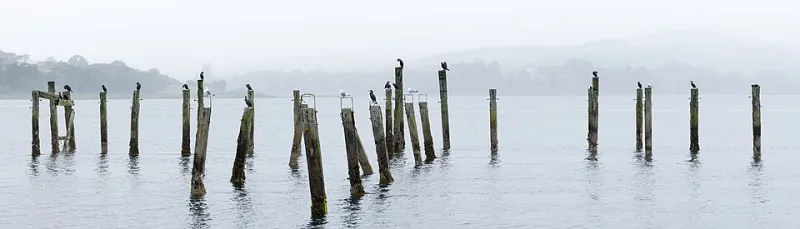
Photo: Colin, CC BY-SA 3.0, via Wikimedia Commons
Some views on Mull come with a queue attached. Calgary Bay on a bright Saturday in August, the Gribun lay-bys when the light is doing its thing, the scrum at Fionnphort before a sailing — all of them are worth seeing, and all of them are at their least enjoyable between roughly half ten and half three on a dry school-holiday day.
That is not a reason to skip them. It is a reason to have somewhere else in your back pocket. The six below aren't secrets, exactly — islanders have been walking them for generations — but they spread the load, and most of them ask for a little more effort than stepping out of the car. That small ask is usually enough.
First, how to read a full car park
A full car park on Mull rarely means a full place. Many of the island's best-known stops hold eight or ten cars, so two coaches and a handful of hire cars can fill one in ninety seconds and empty it again ten minutes later. Before you drive on, give it a slow count: if people are standing around with cameras rather than walking, they'll be gone shortly.
The bigger pattern is tidal. Ferry arrivals into Craignure push a wave of traffic north and west through the middle of the day, and the Fionnphort sailings pull another wave down the Ross of Mull. Weather does the rest — a clear forecast empties the castles and fills the beaches, and rain does the opposite. If you can be somewhere famous before nine, or after four, you'll often have it more or less to yourself.
With that in mind, here are six alternatives that reward the detour.
1. Langamull, instead of Calgary Bay
Calgary is the postcard: white shell sand, turquoise water, a tea room that knows exactly what it's doing. It's also the busiest beach on the island. Langamull, a few miles east near Dervaig, gives you the same northern coast geology with a fraction of the company — reached by a short walk from a small car park, on a path that is grassy, occasionally boggy and entirely worth a pair of boots.
What you get at the end is a wide, pale beach with no facilities, no bins and no queue for anything. Take everything back with you. Go early and you'll likely have the sand to yourself; go at midday and you'll still have room to sit down, which is more than can be said for Calgary in July.
2. The Killiechronan shore, instead of the Loch na Keal convoy
The single-track road along Loch na Keal is one of the great wildlife drives in Britain, and everyone knows it. On a fine morning the passing places fill with vans, tripods and patient otter-watchers. Nothing wrong with that — but there's a quieter way to work the same water.
Drop down to the shore at Killiechronan, where you can leave the car on the verge and walk the grass and shingle edge with Ben More filling the view across the loch. Otters use this shoreline too, and you'll be watching without a queue of headlights behind you. Binoculars, a flask, an hour of patience. That's the whole method.
3. Lochbuie, instead of the Duart Castle car park
Duart is the photogenic one — the castle on the point, the Sound of Mull behind it, the whole Highland-postcard package. Its car park is small and its popularity is not, which makes for a slightly tense ten minutes on a busy afternoon.
Lochbuie, down at the end of a long single-track road past Loch Spelve, offers a different bargain. There's a stone circle in a field, a beach, a ruined church, and a view south to Jura that stops conversation. The road is slow and the driving is part of the day rather than a cost of it. Save Duart for a wet afternoon when the coaches have gone home.
4. Aros Park, instead of the Tobermory seafront
Tobermory's painted harbour front is a genuinely lovely thing, and on a sunny day half the island seems to agree. Ten minutes' walk from the far end of town, Aros Park gives you the view from the other side — the bay, the boats and the coloured houses seen across the water, with woodland, waterfalls and a coastal path in between.
It's a good one for mixed weather, too: when the front is mobbed and the cloud is threatening, the trees shelter you and the viewpoints still deliver. There's parking, a proper path network and enough space that a crowd never really forms.
5. Carsaig, instead of the Gribun lay-bys
The cliffs above Gribun are spectacular, and the little parking areas on the B8035 fill fast when the sun comes out. Carsaig, at the end of the road south from Pennyghael, is the wilder version of the same story: basalt columns, sea arches, fossil trees in the rock and a shoreline that feels genuinely remote.
Be warned that the road is a commitment — narrow, winding, and not for anyone in a hurry — and the walking is rough underfoot. In exchange you get scenery that a coach party simply cannot reach, and a good chance of seeing no one but a few sheep and, if you're lucky, a sea eagle overhead.
6. Kintra, instead of the Fionnphort ferry scrum
Fionnphort on a sailing day is a machine: cars, foot passengers, luggage, timetables. If you're not catching the boat, there's little reason to join it. A mile or two back up the road, the beach at Kintra faces west towards Iona and the Treshnish, with a view that includes everything the ferry queue sees and none of the diesel.
It's a short stop rather than a whole afternoon — a walk on the sand, a look at the islands, a cup of tea from the flask — but it turns a stressful corner of the island into a pleasant one. Time it for late afternoon and the light will do the rest.
Making it work in practice
Two habits solve most of this. The first is starting early: before half nine, the famous places are still places rather than attractions, and the light is better anyway. The second is keeping a short list of alternatives per coast, so that when you arrive somewhere and the verge is nose-to-tail, you're not making a decision on the hoof.
It also pays to think about what you actually came for. If it's a photograph of a specific view, arrive early, take it, and move on before the coaches do. If it's a walk, a picnic or an hour with binoculars, the quieter alternative will almost always be the better use of your time.
And a small request on behalf of everyone who lives here: don't park in passing places, in front of field gates, or on soft verges that will be mud by the time you leave. Mull's roads are single-track and its crofts are working ones. A little care keeps the quiet places quiet — which is, after all, the point.