Farm Gates and Friendly Waves: Walking Mull's Working Land Without the Awkwardness
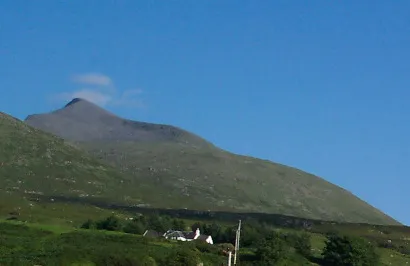
Photo: Released into public domain by author/original uploader was Deus Ex at en.wikipedia, Public domain, via Wikimedia Commons
Mull is not a museum of itself. The paths you walk often cross land that somebody farms, crofts or manages. That is part of the island's charm: you are moving through a lived-in landscape, not a carefully staged trail. The trick is to enjoy that access without making the people who work there feel like they are running a visitor attraction with no closing time.
Scotland's access arrangements are generous, but they come with manners attached. The Scottish Outdoor Access Code is the useful starting point, and its principles are refreshingly simple: respect people, respect the environment, and take responsibility for your own actions. In practice, that means reading the land as carefully as you read the map.
Start with the sign, not the stile
A sign on a gate can mean several things. It might be a waymark, a request to keep to a path, or a practical warning about livestock. It is rarely a personal challenge. Take a moment to read it properly before you start climbing, squeezing or unlatching anything.
Some signs ask you to keep dogs on leads. Some point out a temporary diversion. Some simply say that a track is private, which is not always the same as saying there is no access — but it does usually mean you should look for the intended route rather than wander into a farmyard. If a sign feels ambiguous, choose the clearer path. A calm alternative is almost always better than an awkward debate through a half-open gate.
The gate rules, without the lecture
The basic rule is beautifully simple: leave the gate as you find it. If it was closed, close it behind you. If it was open, leave it open. Do not assume every gate wants the same treatment, and do not improve a farmer's system by inventing your own.
Use the latch, the rope or the loop as intended. If a gate is tied shut with baler twine, that is usually a message rather than an invitation to improvise. In wind, hold the gate firmly before you open it; a gate that swings back on its hinges can damage itself, the fence or your shin. If there is a stile beside the gate, use the stile unless the gate is clearly the easier and intended option.
And if a farmer happens to be nearby, a wave and a nod go a long way. You are not trespassing simply by being there responsibly, but you are also not invisible. A bit of acknowledgement keeps the relationship friendly.
Livestock: calm, space and no heroic selfies
Mull's fields are workplaces. Sheep, cattle and the occasional curious calf are not there to pose for your camera, and they do not read the same map you do. Give them room. Walk steadily rather than striding straight through the middle of a group, and never feed them.
Cattle with calves deserve particular respect. Give them a wide berth, keep your voice low and do not try to move them along. If a group blocks the path, look for a safe way around the edge, or simply retreat and take another route. A detour is not a failure of navigation; it is good judgment.
Dogs need close control around livestock at all times. Keep them on a lead near farm animals and ground-nesting birds, and make sure you can recall them instantly if the situation changes. If cattle become agitated, the priority is getting yourself and your dog out of the field calmly. Close gates behind you, and do not linger to see what happens next.
Stiles, mud and the small courtesies
Stiles are a polite fiction between walkers and fences. Some are sturdy, some are rickety, and some seem to have been designed for a much taller and more flexible person. Test them before you commit. Do not force a stiff stile, and do not pull yourself over a fence beside it simply because the queue is impatient.
Mud is part of the deal on Mull. Try to stay on the path even when it is messy, rather than widening it into a boggy fan. If you need to step aside for a vehicle or livestock, do so carefully and return to the track. Leave stones, fence posts and gates where they are. Small rearrangements have a habit of becoming somebody else's problem.
Croft tracks and shared roads
Many of the tracks that make lovely short walks are also access routes for crofts, farms and houses. Park considerately. Do not block gates, entrances, passing places or the narrow single-track roads that keep island life moving. If you open a gate to park, close it again and make sure you are not standing in the middle of a working route while you put your boots on.
On shared roads, walk facing traffic where it is safe to do so, and step into a passing place or verge to let vehicles pass. A wave of thanks to a driver who slows down is a small thing, but it oils the wheels of an island where everyone eventually meets everyone else.
When the path seems to disappear
Maps are helpful, but they are not always up to date with the exact line of a farm track. If the path fades, look for a gate, a waymark or a sensible line that keeps you away from houses and farmyards. If you cannot find it, retrace your steps rather than pressing through crops, over fences or across a garden boundary.
Access rights do not mean every square metre is yours to explore. Houses and their immediate surroundings, working buildings and clearly private areas are not part of a casual stroll. The spirit of the code is about responsible access, not an all-areas pass.
The wave is the whole point
Walking on Mull works best when it feels like a quiet agreement between visitor and island. You close the gate. You give the sheep room. You read the sign. You take the stile rather than the fence. And when you meet someone who has spent the morning working the land you are crossing, you offer a friendly wave.
That is not a quaint extra. It is the thing that keeps the landscape welcoming. Mull's working land can be shared beautifully, but only if visitors remember that they are guests in somebody else's day. Leave the gate as you found it, leave the livestock in peace, and leave a good impression behind you.