When the Sea Steps Back: Five Mull Shores Worth Timing Your Day Around
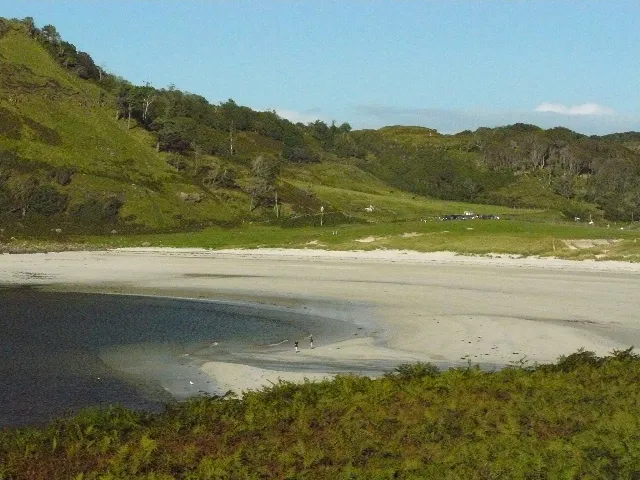
Photo: Wendy Kirkwood, CC BY-SA 2.0, via Wikimedia Commons
Most Mull mornings begin with a glance at the weather app. Fair enough. But if a coastal walk is on the cards, the tide table deserves the first look. Low water does not simply make a beach safer to cross; it changes what the island has to offer. Sand flats appear, rock shelves dry out, and causeways briefly join one place to another. The trick is to treat the tide as a schedule, not an obstacle.
A few general rules before the five. Tide times vary around the island, so use a local table for Tobermory, Bunessan or Oban rather than a rough guess. Aim to arrive an hour or two before low water and be heading back as it turns. Never walk out onto sand or a causeway without knowing when the water returns, and if a crossing looks doubtful, ask someone local rather than testing it. Wind matters too: an onshore breeze can push water in faster than the table suggests.
1. Calgary Bay: the rock-pool classroom
Calgary Bay, on the north-west coast, is the obvious starting point for good reason. At low water the beach widens into a broad sweep of pale sand, and the rocky shelves at either end turn into shallow, warm pools. This is a gentle introduction to tide-timed walking: easy underfoot, plenty to look at, and a clear sense of where the water has been.
Time it for an hour either side of low water, and keep an eye on the old pier and the dunes for your return route. Children will find anemones, tiny crabs and limpet rings without much effort. Pair the walk with a look round Calgary Farmhouse gallery and tearoom, and base yourself in Dervaig or Calgary for the night. In summer, go early or late to avoid the car park rush.
2. Uisken: the long sand flat
Down on the Ross of Mull, Uisken feels like a different island. The beach is white sand, the water is turquoise on a good day, and low tide leaves a wide, firm flat that invites a slow wander towards the sea. Views open to Colonsay and Jura, and the whole place has a calm, end-of-the-road feel.
Low water is the safe window here, but do not be tempted to chase the retreating sea too far. The sand is firm near the waterline and softer higher up, and the tide can return quickly with an onshore wind. Look for oystercatchers, gulls and the occasional seal offshore. Bunessan is the nearest stop for a pub lunch or supplies, and there are cottages scattered around Uisken itself if you want the beach on your doorstep.
3. Fidden and Knockvologan: the machair edge
Fidden and neighbouring Knockvologan, near Fionnphort, are machair-and-white-sand country. At low water the channels and sand bars reveal themselves, and the beach becomes a maze of shallow pools and dry routes. It is beautiful, but it is also the kind of place where you need to know your way back.
Go with a local tide table and a clear plan. The tide moves fast across these flats, and it is easy to become absorbed in the birdlife — ringed plover, dunlin, terns — and forget the time. This is a good spot for a picnic in the dunes when the wind is kind, and Fionnphort is close for the Iona ferry, a pub lunch at the Keel Row, or a shop. Fidden Farm campsite is the obvious stay if you want to wake up beside it all.
4. Erraid causeway: the island you can almost walk to
Erraid is a tidal island off the Ross of Mull, reached by a sand causeway that appears at low water. It is one of the most rewarding low-tide walks on Mull, and also one of the ones that demands the most respect. The crossing is not a casual beach stroll; it is a proper tidal window, and the return matters as much as the outward leg.
Check the tide table, ask locally if you are unsure, and give yourself a generous margin. Once across, the island feels wonderfully quiet, with raised beaches, old lighthouse cottages and views back to the mainland. Do not linger past your turnaround time. Pair the walk with a stay in Fidden or Bunessan, and treat Fionnphort as your lunch stop afterwards. If the tide or weather looks marginal, save it for another day — the island is not going anywhere.
5. Langamull: the quiet north coast
Langamull, near Croig on the north coast, is the kind of beach people mean when they say Mull is quieter than they expected. A short walk from the car park brings you to a sandy bay with rocky edges and a real sense of exposure. At low water the beach opens up, and the walk along the shore feels spacious and unforced.
Allow time for the walk in and out, and time it so you are not returning in the dark or against a rising tide. Look for seals offshore and otters along the quieter edges, though you will need patience and luck. Dervaig is the nearest base, with the Bellachroy Hotel for a meal, and there are cottages in the village that make a good fit for a few days of tide-checked wandering.
Tide-checked days: a short kit list
A paper tide table or a reliable app, a map, and footwear you do not mind getting wet will cover most of it. Add a windproof layer, water, and a phone with a charged battery. Tell someone where you are going if you are heading to a causeway or a remote beach. And remember that low water is not a guarantee of safety — it is a window. Arrive early, leave early, and let the island set the schedule for once.